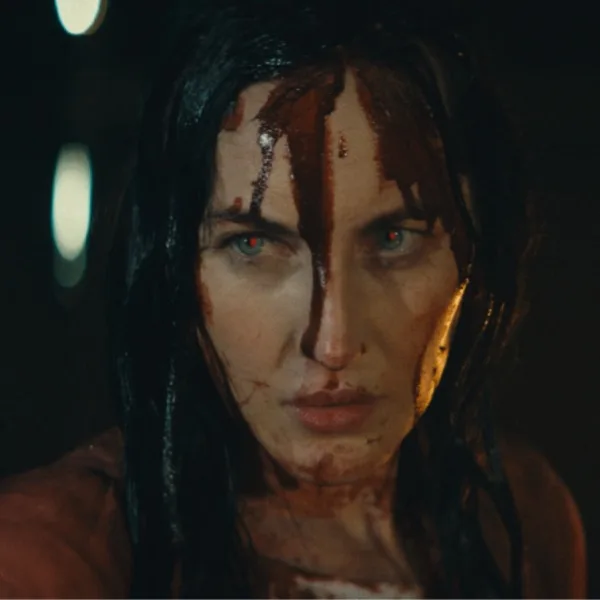
MATININÓ is built around a multigenerational family of Puerto Rican women who transform painful family histories into cinema. Director Gabriela Díaz Arp follows the Villanueva women as they speak about generational trauma and abuse, then re-stage and reimagine those memories through fantastical film sequences. The result moves between documentary testimony and constructed worlds, using performance not to escape reality but to create another way of confronting it.
The title points toward myth, memory, and the possibility of an island imagined on different terms. Within the film, the women become collaborators in their own representation. They are not simply subjects being observed by a filmmaker; they help build the images through which their stories will be seen. That makes MATININÓ as much a film about authorship as it is about family history.
THE QUESTIONS AT THE CENTER
The most compelling questions around Díaz Arp’s film concern the ethics of turning intimate family memory into a visual work, particularly when multiple generations carry different versions of the same history. How does a director create space for testimony without freezing the women in the role of victim? What changes when the people on camera are also participating in the world-building?
The film's science-fiction and fantasy language was another major point of interest. MATININÓ does not treat imagination as decorative. The surreal sequences allow the family to physically inhabit alternate identities — warriors, survivors, authors of a new order — and therefore turn cinematic form into part of the healing process.
MATININÓ remains a strong example of what LEDGERA's film desk is built to follow — formally adventurous work where culture, gender, family memory, and visual style are inseparable.
WHEN RE-ENACTMENT BECOMES A FORM OF CONTROL
Documentary re-creation can be ethically complicated because it asks real people to revisit experiences for the camera. MATININÓ's collaborative approach makes the question more layered: what changes when the women whose histories are being represented help decide the form of the images? Re-enactment can become less about proving exactly what happened and more about reclaiming who gets to shape the memory.
That shift matters for stories of family trauma. A camera can easily reproduce the imbalance it intends to expose if the filmmaker alone controls what pain should look like. Shared authorship offers another possibility — one in which fantasy, performance, and visual invention become tools for refusing a purely victim-centered image.
IMAGINATION AS DOCUMENTARY LANGUAGE
LEDGERA was also interested in the film's refusal to separate fact from imagination into opposing categories. Memory is already subjective, and family history is often carried through fragments, silences, stories, photographs, and competing interpretations. Surreal or speculative imagery can make those invisible structures visible without claiming to be literal evidence.